
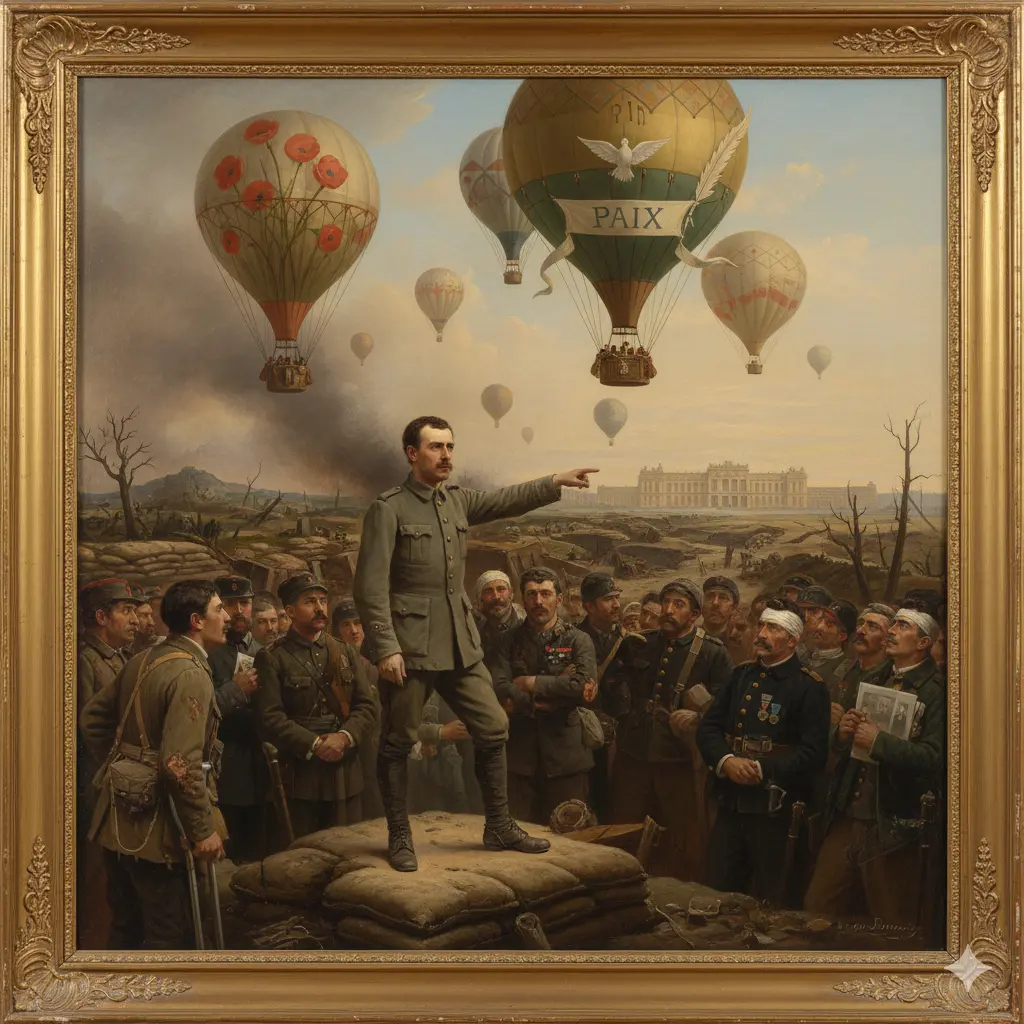
Echoes of the Great War: From the Trenches to Versailles
I saw the fire and the mud. On this journey, we will walk the sacred ground where a generation was lost. Not to glorify war, but to understand its terrible humanity, the collapse of empires, and the fragile attempt at peace that followed.
📍 Brussels, Europe · 🗓 Summer & Winter 2027 · 🗣 English

🏛️ Your historical guide
I saw the fire and the mud. On this journey, we will walk the sacred ground where a generation was lost. Not to glorify war, but to understand its terrible humanity, the collapse of empires, and the fragile attempt at peace that followed. Listen to the stories the cannons silenced.
Who runs this program
This itinerary is new, our track record is not. These are testimonials from participants in our executive programs in Vienna, translated from Spanish.
It is fascinating how the tools help solve real problems.
 Billy Batware United Nations Regional Academy
 An excellent organization that gives you a great opportunity to live this magnificent experience, gain knowledge and make new friends.
 Marcela Mejía United Nations Office on Drugs and Crime, Colombia
 Thank you for all the tools and lessons, a hands-on program where I met wonderful people.
 Natalia Lever The Climate Reality Project Latin America
 Institutions and organizations we have worked with








🎯 Why this journey
Why it matters
The First World War was the inaugural catastrophe of the twentieth century. This journey takes us to its most iconic battlefields to grasp the scale of the destruction, the end of the old empires, and the failed attempt at peace that sowed the seeds of an even greater conflict.
What you'll learn
You will experience the geography of trench warfare and understand the impact of new technologies such as gas and heavy artillery. You will analyze leadership decisions and the consequences of the Treaty of Versailles, a crucial lesson on how a war is won and how the peace is lost.
Relevance
Conflict management, post-conflict negotiation, and understanding historical grievances are vital skills. This journey offers an unmatched perspective for diplomats, mediators, military leaders, and executives on the consequences of strategic decisions and the importance of building a sustainable peace.
✨ Highlights
- Guided 10-day itinerary
- Small group (max. 20 participants)
- Curated pre-work: 2 resources
- Group discounts available
🗺️ Itinerary
Arrival in Brussels. Our first dinner will focus on the prelude to the war: the system of alliances, the arms race, and the assassination in Sarajevo. We will visit the Royal Museum of the Armed Forces and Military History to set the conflict in context.
↳ Belgium was the first country invaded, the "poor little country" whose neutrality was violated, triggering Britain's entry into the war. Beginning here means understanding the origin of the conflict on the Western Front.
Transfer to Ypres. We will visit the "In Flanders Fields" museum and the reconstructed trenches at Sanctuary Wood. At dusk, we will attend the moving "Last Post" ceremony at the Menin Gate, which commemorates the missing.
↳ Ypres symbolizes the tenacity and horror of trench warfare and the use of new chemical weapons. It is a visceral introduction to the industrial scale of the slaughter.
We will devote the day to the Ypres Salient, focusing on the Battle of Passchendaele. We will visit Tyne Cot Cemetery, the largest Commonwealth cemetery in the world, and walk the ground that became a sea of mud.
↳ Passchendaele is synonymous with the futility and extreme suffering of trench warfare. The landscape, even today, speaks of the hell the soldiers endured.
Journey to the Somme region. We will visit the Thiepval Memorial to the Missing and the Lochnagar Crater, the result of an underground mine. We will walk the battlefields that witnessed one of the deadliest offensives in British history.
↳ The Somme represents the catastrophe of the first day and the brutal learning curve of the armies. Here, nineteenth-century tactics met twentieth-century technology, with devastating results.
We will make a detour to visit the Belleau Wood battlefield, where the U.S. Marine Corps earned its reputation in 1918. We will analyze the impact of the arrival of American troops and their different approach to combat.
↳ The American intervention was decisive. Studying one of its first major battles allows us to understand the vigor and inexperience they brought to the stalemated Western Front.
We will head to Verdun, the symbol of French resistance. We will explore the forts of Douaumont and Vaux and the striking Ossuary, which holds the remains of hundreds of thousands of unidentified soldiers. A day to understand the concept of total war.
↳ Verdun was a ten-month inferno that embodies the war of attrition. "They shall not pass!" was the motto, and the human cost was immense. It is a testament to nationalism and resistance at any price.
We will visit German cemeteries and memorials in the Verdun sector, such as Consenvoye. A historian will speak to us about the experience of the German soldier, his motivations, and the hardships he faced. A discussion of the narrative of the "enemy."
↳ To understand a conflict, it is crucial to see both sides. This day humanizes the "other" and helps us grasp the shared experience of suffering in the trenches, beyond nationalities.
Journey to Paris. We will visit the Compiègne clearing, where the Armistice was signed in a railway carriage. In the afternoon, at Les Invalides, we will focus on the treatment of the war wounded and the psychological impact of "shell shock."
↳ The Armistice marked the end of the fighting, but not of the suffering. This day connects the political end of the war with its long and painful human epilogue.
We will visit the Palace of Versailles, focusing on the Hall of Mirrors, where the Treaty of Versailles was signed. A discussion of the harsh conditions imposed on Germany and their consequences, laying the groundwork for future conflicts.
↳ The treaty signed here sought peace, but its punitive terms sowed the seeds of future conflicts. It is a crucial lesson on how to end a war and the difficulties of building a lasting peace.
Morning in Paris. We will reflect on the fall of the Austro-Hungarian, Russian, Ottoman, and German Empires. Farewell lunch and transfer to the airport.
↳ The Great War destroyed not only lives but also empires and a world order. Concluding here allows us to understand how the map of Europe and the Middle East was redrawn, a legacy that still affects us today.
📚 Orders from the Front
- Book All Quiet on the Western Front, Erich Maria Remarque
- Film 1917, Sam Mendes
Your complete experience
✓ What's included
- Accommodation in charming, well-located hotels.
- All breakfasts and the lunches or dinners specified in the itinerary.
- Expert guides and historians throughout the journey.
- Entrance to all museums, monuments and historic sites in the itinerary.
- Comfortable private transport for all transfers between cities and activities.
- Exclusive workshops, tastings and immersive experiences described in the program.
- A welcome pack with reading materials and a travel journal.
- Basic travel insurance.
✕ Not included
- Round-trip international flights to the expedition start/end point.
- Meals and drinks not specified in the itinerary.
- Personal expenses, purchases and souvenirs.
- Optional activities during free time.
- Tips (optional).
Travelling on your own?
Join the list for the departure you want
These programs run as groups, so we do not sell individual seats. Leave your details for the departure you are interested in: once the group is confirmed we introduce you to the local organizer, who handles registration.
🧭 How it works
Tell us your goal
Message us with your organization, focus area and approximate dates.
We tailor it
We adapt the itinerary, cities, language and group size. Private groups available.
Confirm and travel
We handle logistics, certificates and materials; your team lives the experience.