
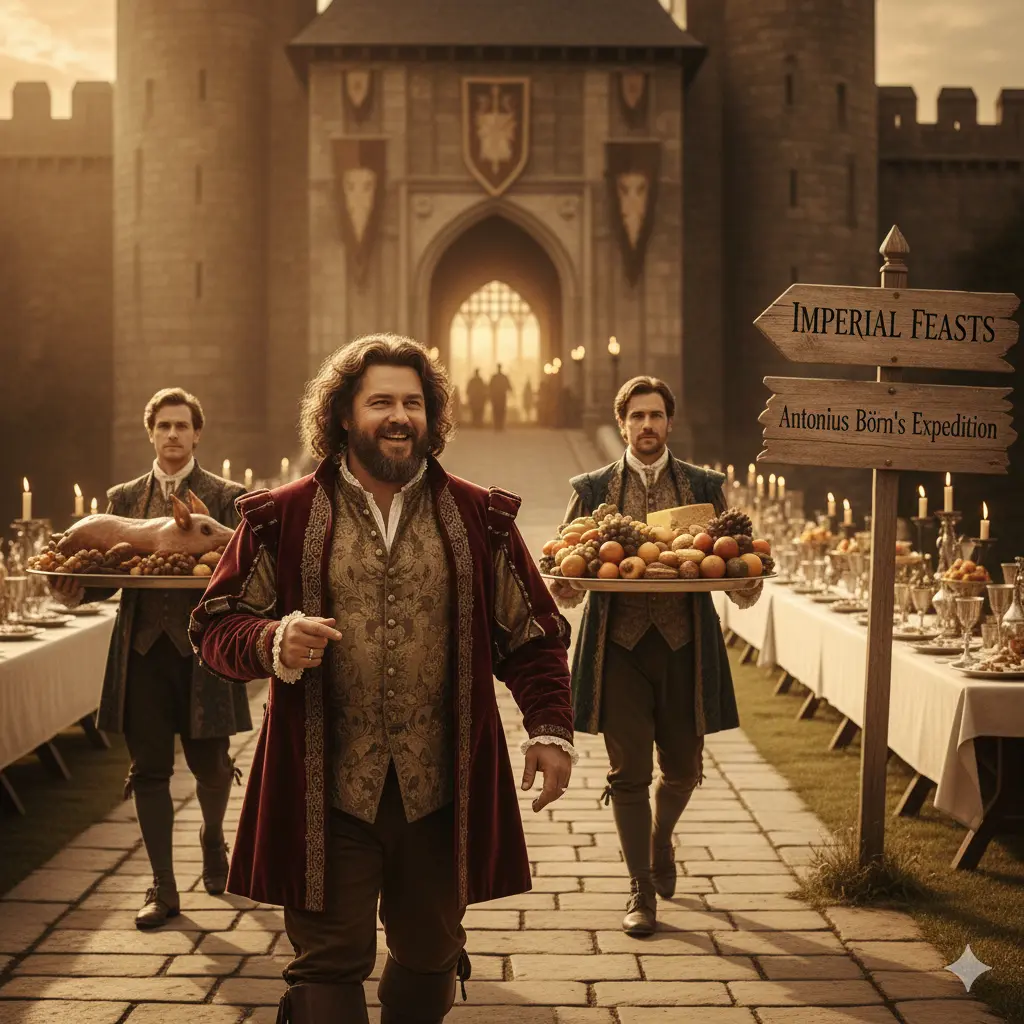
Imperial Feasts: A Journey Through European Abundance
The table has always been a stage for power. From Viking "smörgåsbord" to the opulent banquets of the great Parisian hotels, food has served to celebrate, negotiate, and dominate.
📍 Stockholm, Northern Europe · 🗓 Summer & Winter 2027 · 🗣 English

🏛️ Your historical guide
The table has always been a stage for power. From Viking "smörgåsbord" to the opulent banquets of the great Parisian hotels, food has served to celebrate, negotiate, and dominate. On this journey, we will not merely eat; we will decode the hidden language of Europe's great feasts.
Who runs this program
This itinerary is new, our track record is not. These are testimonials from participants in our executive programs in Vienna, translated from Spanish.
It is fascinating how the tools help solve real problems.
 Billy Batware United Nations Regional Academy
 An excellent organization that gives you a great opportunity to live this magnificent experience, gain knowledge and make new friends.
 Marcela Mejía United Nations Office on Drugs and Crime, Colombia
 Thank you for all the tools and lessons, a hands-on program where I met wonderful people.
 Natalia Lever The Climate Reality Project Latin America
 Institutions and organizations we have worked with







🎯 Why this journey
Why it matters
This journey explores the culture of the 'feast' and abundance in Europe, from the Nordic smörgåsbord to the Parisian 'grand buffet'. It is a look at how different cultures celebrate food in community, and how the table has been used throughout history as a stage for power and hospitality.
What you'll learn
You will come to understand the different philosophies of abundance: the organized abundance of the north, the communal and joyful abundance of Bavaria, and the opulent, artistic abundance of Paris. You will analyze the logistics behind the great markets and restaurants that sustain these gastronomic traditions.
Relevance
Event management, supply-chain logistics, and the creation of memorable experiences are key skills across many industries. This journey offers a unique perspective on large-scale organization and presentation, ideal for professionals in hospitality, event management, and logistics.
✨ Highlights
- Guided 10-day itinerary
- Small group (max. 18 participants)
- Curated pre-work: 2 resources
- Group discounts available
🗺️ Itinerary
Arrival in Stockholm. Our first dinner will be an authentic Swedish "smörgåsbord" at a historic restaurant. We will learn the correct order in which to enjoy the herrings, the salmon, the hot dishes, and the desserts.
↳ The smörgåsbord is Sweden's contribution to the world of buffets. To understand its structure and evolution is to understand a culture that values both abundance and order, reflecting its transition from imperial power to organized society.
We will visit the Östermalms Saluhall, a historic market of iron and glass, to admire the quality of Swedish produce. In the afternoon, we will take part in a "fika", the sacred Swedish pause for coffee and cake, discussing its social importance.
↳ The market showcases the Nordic pantry, while the "fika" reveals a more intimate side of Swedish culture: a celebration of the pause and of conversation, in contrast to the abundance of the smörgåsbord.
Travel to Copenhagen. We will explore the evolution of abundant food in Denmark, from the open sandwich "smørrebrød", a work of art in itself, to the influence of the "New Nordic Cuisine" that has revolutionized world gastronomy.
↳ Copenhagen shows how a tradition of simple, abundant food can reinvent itself with a focus on seasonality, local ingredients, and innovation, transforming the concept of the "feast" for the 21st century.
We will immerse ourselves in the vibrant Torvehallerne market, sampling local delicacies. In the evening, a dinner at a cozy restaurant will introduce us to the concept of "hygge", the Danish philosophy of comfort and well-being, a feast for the soul.
↳ Torvehallerne is the epicenter of Copenhagen's food scene. Pairing it with the idea of "hygge" teaches us that a feast is not always opulence, but also warmth, comfort, and good company.
Flight to Munich. We will immerse ourselves in the culture of the "Biergarten", where food is abundant, shared, and served alongside beer. We will finish with a feast of pork knuckle, sausages, and pretzels at a traditional brewery.
↳ The Biergarten represents the popular, democratic feast. Unlike a formal buffet, it is a communal space where the abundance of the land is celebrated in an informal, joyful way, a pillar of Bavarian identity.
We will explore the Viktualienmarkt, Munich's most famous food market. We will try the "Weisswurstfrühstück", the traditional Bavarian breakfast of white sausage, pretzel, and wheat beer, learning its rituals and timing.
↳ The market is the beating heart of Munich's gastronomy. The white-sausage breakfast is a cultural ritual that teaches us about the importance of tradition and timing in food.
Train journey to Paris. In the evening, we will experience a "grand buffet" at a historic hotel or luxury brasserie, a spectacle of opulence, ephemeral art, and culinary "savoir-faire".
↳ Paris codified haute cuisine and fine service. The French "grand buffet" is not merely food, it is a display of culinary art, a demonstration of technique and abundance descended directly from the banquets of the royal court.
An early-morning visit to the Marché Rungis (special visit), the largest wholesale market in the world. We will witness the astonishing logistics that supply the capital of gastronomy, from meats and fish to cheeses and flowers.
↳ Rungis is the hidden engine of Parisian gastronomy. Understanding its scale and complexity is essential to appreciating the final feast we will enjoy in the city's restaurants.
A seminar on Auguste Escoffier, the chef who modernized French cuisine and created the brigade system. Dinner at a classic brasserie to see his legacy in action, from the organization of the kitchen to the menu.
↳ Escoffier transformed the chaotic world of 19th-century kitchens into an efficient, professional system. His influence is the foundation of almost every fine-dining restaurant in the world today.
A free morning to explore a "pâtisserie" or "boulangerie" one last time. Our farewell lunch will be at La Grande Épicerie, a gourmet temple, for a final reflection on the industry that sustains Europe's great feasts. Transfer to the airport.
↳ Concluding in Paris lets us appreciate the entire gastronomic value chain, from the raw product at Rungis to the ultimate expression of luxury in its shops and restaurants, the perfect summary of our journey through European abundance.
📚 The Traveler's Appetite
- Book The Belly of Paris, Émile Zola
- Film Babette's Feast, Gabriel Axel
Your complete experience
✓ What's included
- Accommodation in charming, well-located hotels.
- All breakfasts and the lunches or dinners specified in the itinerary.
- Expert guides and historians throughout the journey.
- Entrance to all museums, monuments and historic sites in the itinerary.
- Comfortable private transport for all transfers between cities and activities.
- Exclusive workshops, tastings and immersive experiences described in the program.
- A welcome pack with reading materials and a travel journal.
- Basic travel insurance.
✕ Not included
- Round-trip international flights to the expedition start/end point.
- Meals and drinks not specified in the itinerary.
- Personal expenses, purchases and souvenirs.
- Optional activities during free time.
- Tips (optional).
Travelling on your own?
Join the list for the departure you want
These programs run as groups, so we do not sell individual seats. Leave your details for the departure you are interested in: once the group is confirmed we introduce you to the local organizer, who handles registration.
🧭 How it works
Tell us your goal
Message us with your organization, focus area and approximate dates.
We tailor it
We adapt the itinerary, cities, language and group size. Private groups available.
Confirm and travel
We handle logistics, certificates and materials; your team lives the experience.