The Industrial Revolution: A World Forged in Steam
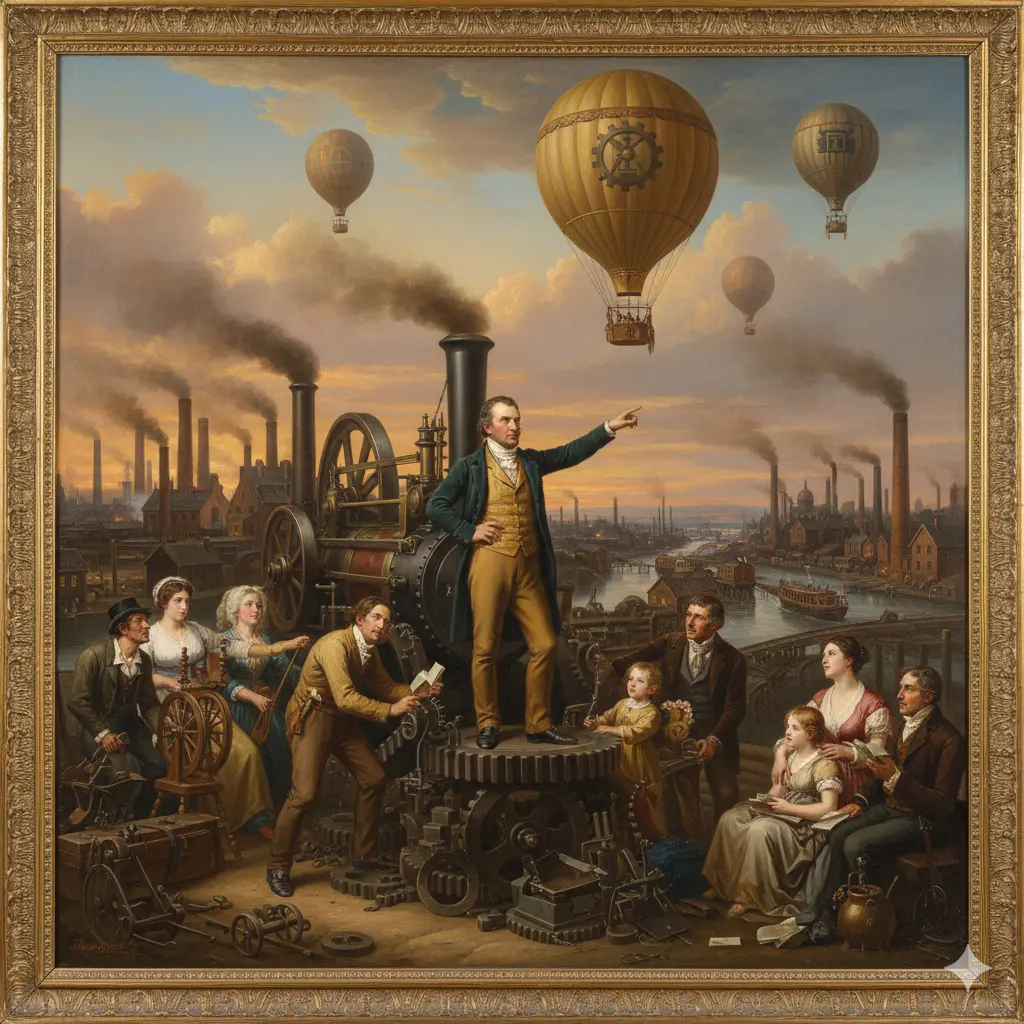
My steam engine did more than pump water out of the mines: it powered a new era for humanity. Join me on a journey into the heart of the Industrial Revolution.
📍 Manchester, United Kingdom · 🗓 Summer & Winter 2027 · 🗣 English

🏛️ Your historical guide
My steam engine did more than pump water out of the mines: it powered a new era for humanity. Join me on a journey into the heart of the Industrial Revolution. We will feel the heat of the forges and the roar of the looms that changed the world forever, for better and for worse.
Who runs this program
This itinerary is new, our track record is not. These are testimonials from participants in our executive programs in Vienna, translated from Spanish.
It is fascinating how the tools help solve real problems.
 Billy Batware United Nations Regional Academy
 An excellent organization that gives you a great opportunity to live this magnificent experience, gain knowledge and make new friends.
 Marcela Mejía United Nations Office on Drugs and Crime, Colombia
 Thank you for all the tools and lessons, a hands-on program where I met wonderful people.
 Natalia Lever The Climate Reality Project Latin America
 Institutions and organizations we have worked with






🎯 Why this journey
Why it matters
The Industrial Revolution was one of the fastest and most profound transformations in history, comparable only to the invention of agriculture. This journey to its epicenter in the United Kingdom is key to understanding the birth of the modern world, urbanization, and capitalism.
What you'll learn
You will understand the synergy between technological innovation (the steam engine, the railway), capital, and new forms of social organization. You will analyze both the progress and the creation of wealth as well as the enormous social costs: labor exploitation, pollution, and the emergence of the working class.
Relevance
We are living through a new technological revolution driven by AI and automation. This journey offers an indispensable historical framework for analyzing processes of disruption, their social impacts, and the ethical responsibilities of innovation. It is essential for entrepreneurs, engineers, economists, and policymakers.
✨ Highlights
- Guided 10-day itinerary
- Small group (max. 18 participants)
- Curated pre-work: 2 resources
- Group discounts available
🗺️ Itinerary
Arrival in Manchester, the world's first industrial city. We will visit the Science and Industry Museum, housed in the oldest railway station. We will see working steam engines and looms that defined this era.
↳ Manchester was the epicenter of change. Here, technology, capital, and labor combined to create an entirely new model of production and urban society, with all its promises and contradictions.
Journey to Liverpool. We will explore the historic Albert Docks, a World Heritage Site and the heart of a port that handled 40% of world trade. We will discuss the port's role in the trade of cotton, sugar, and, tragically, enslaved people.
↳ Liverpool was the gateway in and out of the British Empire. Its prosperity was inextricably linked to the global economy, including the triangular trade, allowing us to grasp the worldwide scale of the revolution.
We will travel by train along the route of the world's first intercity railway. We will stop at Rainhill, where in 1829 a set of trials settled the future of the railway in favour of Stephenson’s "Rocket", and at Edge Hill, the oldest passenger station still in service anywhere in the world. We will understand how the railway revolutionized transport, commerce, time, and space.
↳ The railway was the invention that truly "shrank" the world. It enabled the rapid movement of goods and people, created standardized time zones, and transformed the physical and mental landscape of society.
A day trip to Ironbridge Gorge, a World Heritage Site and birthplace of the Industrial Revolution. We will see the world's first iron bridge and the original blast furnaces, understanding how the mass production of iron became the backbone of this new era.
↳ If cotton was the engine, iron was the skeleton of the Industrial Revolution. Ironbridge is where humanity learned to master this material on an unprecedented scale, making everything else possible.
Back in Manchester, we will visit the People's History Museum to explore the living conditions of the working class and the birth of the trade union movement. We will discuss the works of social reformers and the role of Friedrich Engels, who wrote about the condition of the working class in this very city.
↳ This day focuses on the human cost of progress. Understanding the struggle for labor rights and social reform is just as important as understanding the technology, since both shaped the modern world.
Journey to London. We will visit the Bank of England and the City of London to understand how the revolution was financed and how modern capitalism was born. A walk through Canary Wharf will offer a contrast with today's financial center.
↳ London represents the financial brain of the Industrial Revolution. The capital that flowed from here funded railways, factories, and mines around the world, establishing a global economic system that still endures.
A tour of Joseph Bazalgette's sewer system will speak to the enormous sanitary challenges of mass urbanization. We will then visit the Crossness Pumping Station, an "industrial cathedral" that showcases the civic pride of Victorian engineering.
↳ The Industrial Revolution created problems on a scale never seen before, and it demanded equally bold engineering solutions. The story of the "Great Stink" is a lesson in crisis, innovation, and investment in public infrastructure.
A literary walk through Dickens's London, from the law courts of "Bleak House" to the neighborhoods of "Oliver Twist." We will visit the Charles Dickens Museum to discuss how literature became a powerful tool for social critique and raising awareness.
↳ Dickens was the conscience of the industrial age. Through his novels, he gave voice to the forgotten and exposed the injustices of the new system, proving that art can be an engine of social change.
A visit to the Victoria and Albert Museum, which was born out of the Great Exhibition of 1851, the great world's fair of industry. We will analyze how design and the applied arts reacted to mass production, with movements such as Arts and Crafts.
↳ The Great Exhibition was the celebration of British industrial triumph. The museum that grew out of it allows us to assess the aesthetic and social impact of this era, and the reactions it provoked in search of beauty and craftsmanship.
We will reflect on the global legacy of the Industrial Revolution, from its innovations to its environmental consequences. Farewell lunch and transfer to the airport.
↳ Concluding our journey allows us to assess the global impact of this revolution, whose social, economic, and environmental consequences we are still managing today. It is a reflection on the price and the benefits of progress.
📚 The Industrialist's Handbook
- Book Hard Times, Charles Dickens
- Film The Young Karl Marx, Raoul Peck
Your complete experience
✓ What's included
- Accommodation in charming, well-located hotels.
- All breakfasts and the lunches or dinners specified in the itinerary.
- Expert guides and historians throughout the journey.
- Entrance to all museums, monuments and historic sites in the itinerary.
- Comfortable private transport for all transfers between cities and activities.
- Exclusive workshops, tastings and immersive experiences described in the program.
- A welcome pack with reading materials and a travel journal.
- Basic travel insurance.
✕ Not included
- Round-trip international flights to the expedition start/end point.
- Meals and drinks not specified in the itinerary.
- Personal expenses, purchases and souvenirs.
- Optional activities during free time.
- Tips (optional).
Travelling on your own?
Join the list for the departure you want
These programs run as groups, so we do not sell individual seats. Leave your details for the departure you are interested in: once the group is confirmed we introduce you to the local organizer, who handles registration.
🧭 How it works
Tell us your goal
Message us with your organization, focus area and approximate dates.
We tailor it
We adapt the itinerary, cities, language and group size. Private groups available.
Confirm and travel
We handle logistics, certificates and materials; your team lives the experience.